AI Art Prompts That Work: A Copy-Ready Starter Kit
Summary
The best AI art prompts follow one skeleton: a subject first, then a single style direction, one light source, a camera or framing detail, and a mood. Keep prompts between 30 and 80 words, change one variable at a time, and write for the model you use, since Midjourney and Flux read prompts differently. This guide gives you eight copy-ready prompts to remix.
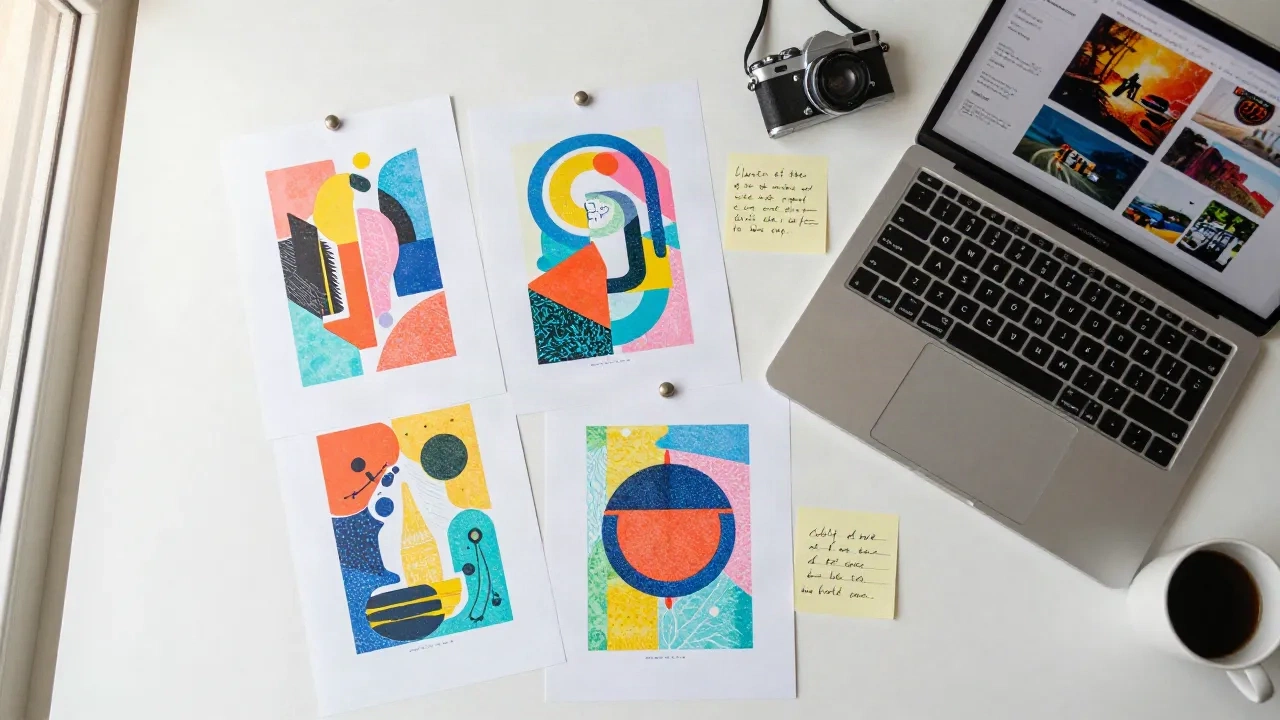
You spent 40 minutes on a prompt and got a glossy, generic image that looks like every other output on the internet. Good AI art prompts fix that with five ingredients: a subject, one style direction, a light source, a camera or framing choice, and a mood. This page gives you the formula, eight copy-ready prompts, and the habits that stop outputs from looking like defaults.
Steal this, then remix it.
Why most AI art prompts fail
The model fills every gap you leave. If you write "a woman in a forest", you get the average of every woman-in-a-forest picture it has seen. That is the look people now spot in half a second.
Most guides tell you to pile on adjectives. Don't. Fifty modifiers do not give you a better image, they give the model fifty things to fight over. A short prompt with one clear style beats a long prompt with five competing ones.
The other trap is treating every model the same. Midjourney reads a prompt like a mood note and leans hard into style. Flux is more literal and wants explicit detail. A prompt that sings in one can fall flat in the other, so write for the tool you are using.
The five-part formula
Every prompt in this kit follows the same skeleton. Learn it once and you can build your own.
Subject and action. Who or what, doing what. Put it first.
Style. One direction only: medium, era, or technique. "Riso print", "35mm documentary", "oil on linen".
Light. The single biggest lever on mood. More on that below.
Camera and framing. Lens, distance, angle. "85mm, low angle" tells the model more than "cinematic".
Mood. One or two words that set the emotional temperature.
Order matters. Black Forest Labs says it plainly in its FLUX.2 prompting guide: the model pays more attention to what comes first, and the sweet spot sits around 30 to 80 words for most projects. So the subject leads, the mood trails.
Eight AI art prompts to copy
Replace the bracketed bits with your own subject. Everything else is built to survive the swap.
1. Documentary portrait. "[Subject] in a cramped print shop, candid moment, 35mm film, slight grain, window light from the left, 50mm, waist-up framing, quiet and tired mood."
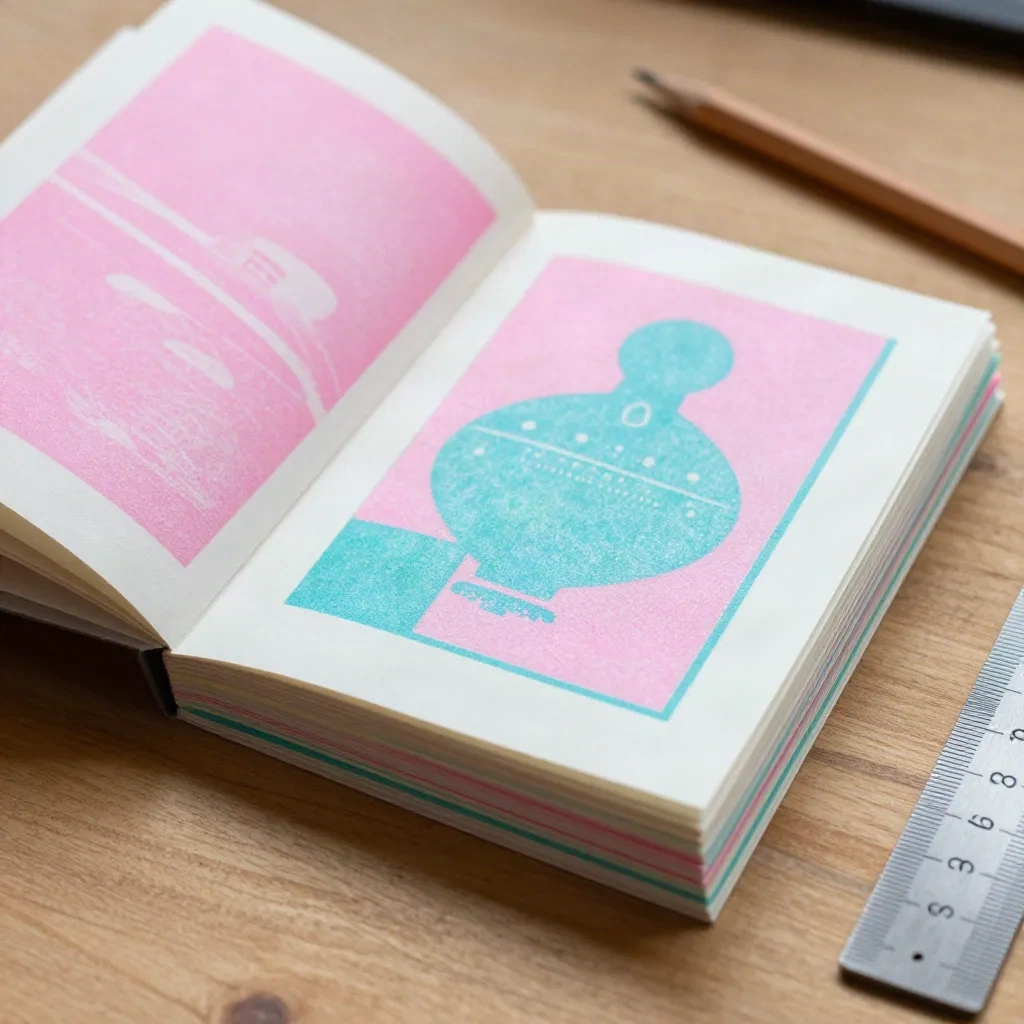
2. Riso poster. "[Subject] as a two-color risograph print, pink and teal ink, visible misregistration, flat shapes, paper grain, centered composition, playful mood."
3. Brutalist architecture. "Concrete apartment block at dusk, hard geometry, low angle, overcast diffused light, wide 24mm lens, empty street, austere mood."
4. Product on a table. "Ceramic vase on a worn oak table, three-point softbox lighting, soft shadows, 90mm macro, shallow depth of field, calm mood."
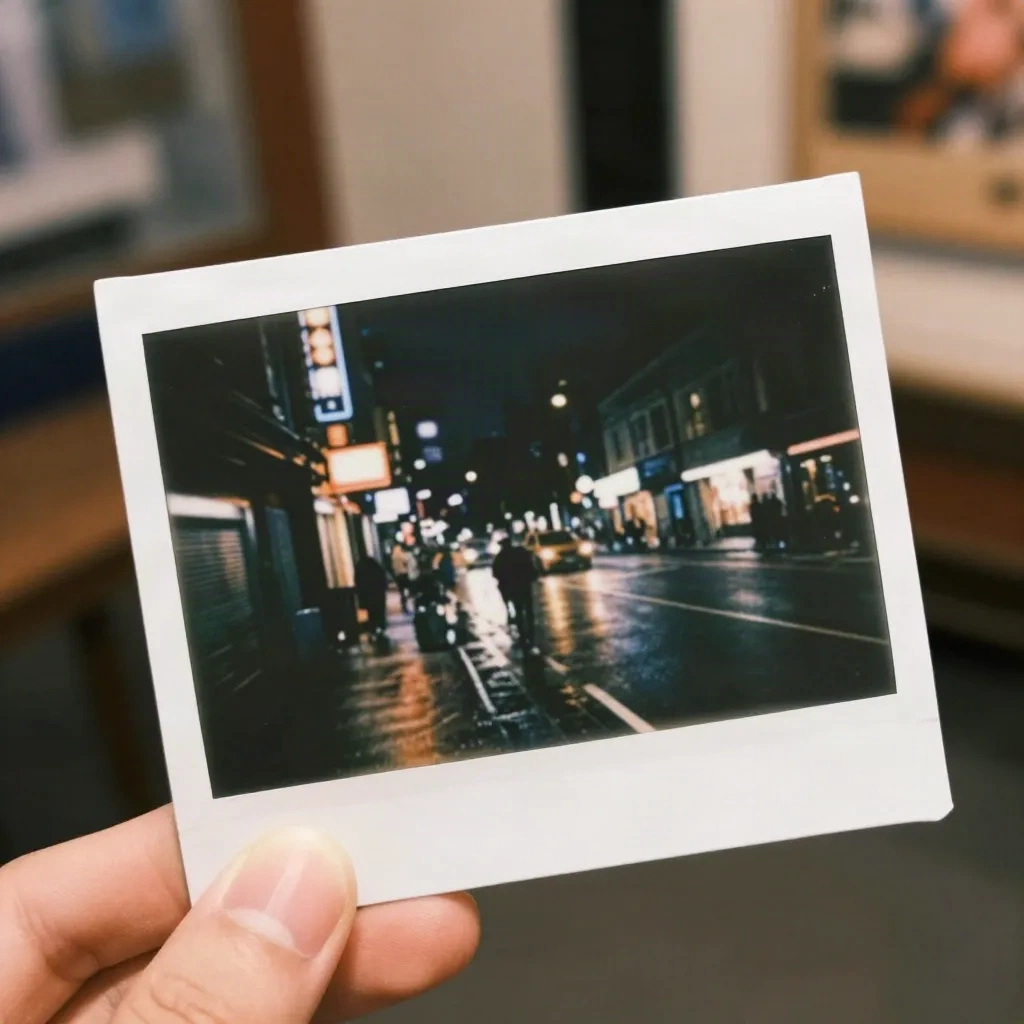
5. Neon street. "Rain-soaked street in Osaka at night, neon reflections on wet asphalt, one figure with an umbrella, 35mm, handheld feel, lonely mood."
6. Vintage Kodachrome. "Family on a road trip beside a station wagon, Kodachrome color, 1970s, sun-bleached highlights, wide shot, nostalgic mood."
7. Editorial still life. "Fruit and scissors on a pastel paper backdrop, hard direct flash, strong shadow, top-down, deadpan fashion-magazine mood."
8. Surreal landscape. "Giant paper boat drifting over a salt flat at sunrise, golden hour backlight, ultra-wide, tiny human for scale, dreamlike mood."
Drop any of these into Flux, Nano Banana, or Midjourney and see what comes back. Then change exactly one thing. If you change three at once you learn nothing.
Light is the cheapest upgrade
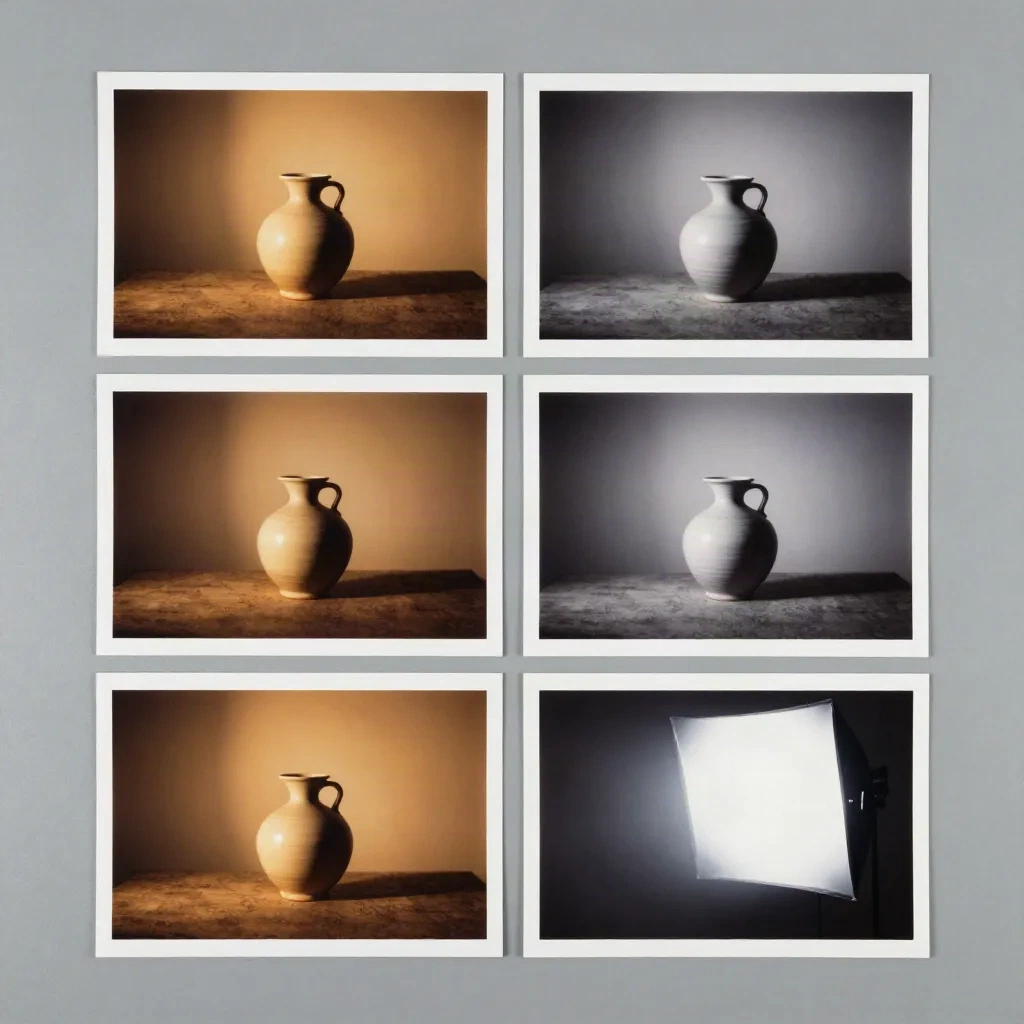
If your outputs feel flat, the problem is almost always the light. The same vase looks like a different photograph under golden hour, overcast sky, hard flash, or a softbox. You do not need a new model, you need a new light word.
A quick cheat sheet you can keep open:
Golden hour, warm backlight: nostalgic, gentle, a little sentimental.
Overcast, diffused daylight: honest, editorial, no drama.
Direct flash, hard shadow: punchy, fashion, slightly rude.
Softbox, three-point: clean product work, nothing to argue with.
Pick one per prompt. Two competing light sources usually confuse the output, and the result looks muddy.
Midjourney and Flux want different things
Same idea, two dialects.
Midjourney rewards evocative, compact language. Give it a mood, a medium, and a reference point, then use parameters like aspect ratio to frame the image. It has a strong built-in taste, which is great when you want a stylized poster and annoying when you want something plain.
Flux does what you say. That is the whole trick. If you want a specific hex color on a specific object, say so. The same guide notes that FLUX.2 does not support negative prompts, so you describe what you want instead of what you don't. Write "sharp focus throughout", not "no blur".
For a quick rule of thumb: if the output looks too pretty, you are in Midjourney territory and need to rein it in. If it looks too bland, you are in Flux territory and need to say more.
How to read an output like an art director
Before you touch the prompt, look at the image for ten seconds and name what is wrong in plain words. "Too clean." "Light feels flat." "The subject is lost." Each complaint maps to one part of the formula.
Too clean usually means the style line is missing texture: grain, paper, film stock, scanner dust. Flat light means you never named a light source. A lost subject means the first ten words were spent on setting. Fixing the right part takes one edit. Fixing the wrong part takes an hour.
This habit is borrowed straight from art direction. A good AD does not say "make it better". They say "warmer, tighter, less polished", and the designer knows where to push. Give the model the same kind of note.
Three prompt styles for three jobs
Not every prompt has the same job, so not every prompt should look the same.
Exploration prompts are short, 10 to 30 words. You are fishing for a direction, so leave room. Write the subject and one style line, run four variations, and see what surprises you.
Production prompts are the 30 to 80 word versions in this kit. You know what you want, so every part of the formula is filled in. This is where light and lens earn their keep.
Reference prompts are long and structured, often written as labeled fields: scene, subject, style, lighting, camera. They are handy when you need to change one element without disturbing the rest, or when a teammate has to rerun your work next month. Flux handles this format as well as plain sentences, so pick whichever fits how you work.
Most people write production prompts for everything and wonder why they never get a surprise. Start loose, then tighten.
Skip these habits
A few things that everybody recommends and that rarely pay off:
Stacking style names. "Cyberpunk, vaporwave, baroque, Ghibli" is not a style, it is a coin toss.
Quality spam. "8k, ultra detailed, masterpiece" is filler. A lens and a light source do more work than any of it.
Artist-name roulette. It gets you a pastiche and a muddled legal question. Describe the technique instead.
Copying a viral prompt unchanged. If a thousand people use it, a thousand people get that image.
Worth the effort instead: keeping a running file of prompts that worked, with the model name and the one change that mattered. That file is your actual library.
One more habit that pays off fast: name the imperfections. Real photographs have dust, grain, a slightly crooked horizon, a bit of lens flare. Outputs without any of that read as rendered. A line like "slight film grain, soft edges, imperfect framing" does more for realism than any resolution keyword, and it costs you six words.
Keep a short list of your favorite texture words next to your light words. Between the two lists you can rebuild most looks from scratch, and you stop depending on someone else's prompt.
Build a moodboard before you write
The best prompts start outside the prompt box. Collect five or six references first, on Are.na or a pinboard or a folder on your desktop. Look for what they share: the grain, the palette, the way the light falls.
Then translate those shared traits into words. A moodboard of pink-and-teal zine pages becomes "risograph, two-color, paper grain, misregistration". That is not magic. It is a disciplined moodboard turned into a sentence.
Fix a prompt that is almost there
When an output is close but wrong, resist the urge to rewrite everything. Work through this order:
Check the first ten words. Is the subject there, clearly?
Count your styles. More than one? Cut to one.
Check the light. Name it, or the model picks for you.
Add a lens or angle. One camera detail changes the whole composition.
Cut anything that is filler. If a word does not change the image, it is noise.
If you want to push a good output further, an upscaler can recover detail without redrawing the picture.
What would we actually do next?
Pick two prompts from the list, run each three times, and keep notes. Change one variable per run: the light, the lens, the mood. After an afternoon you will know more about your favorite model than any ranking could tell you.
Then write your own. Start from the five parts, keep it under 80 words, and make the first ten words count. Copy the prompt, drop it in, and see what breaks. That is the fun part.