Higgsfield vs Runway: Which AI Video Studio Wins in 2026?
Summary
Higgsfield vs Runway comes down to what you do after the clip exists. Higgsfield is the better pick if you want one login for Seedance 2.5, Kling 3.0, Veo 3.1 and character-consistent shots, with cheaper entry credits. Runway is the better pick if you finish, edit and hand off inside the tool: Gen-4.5, Aleph 2.0, 4K upscaling, ProRes and an API. Prices below were read off both pricing pages in November 2026.
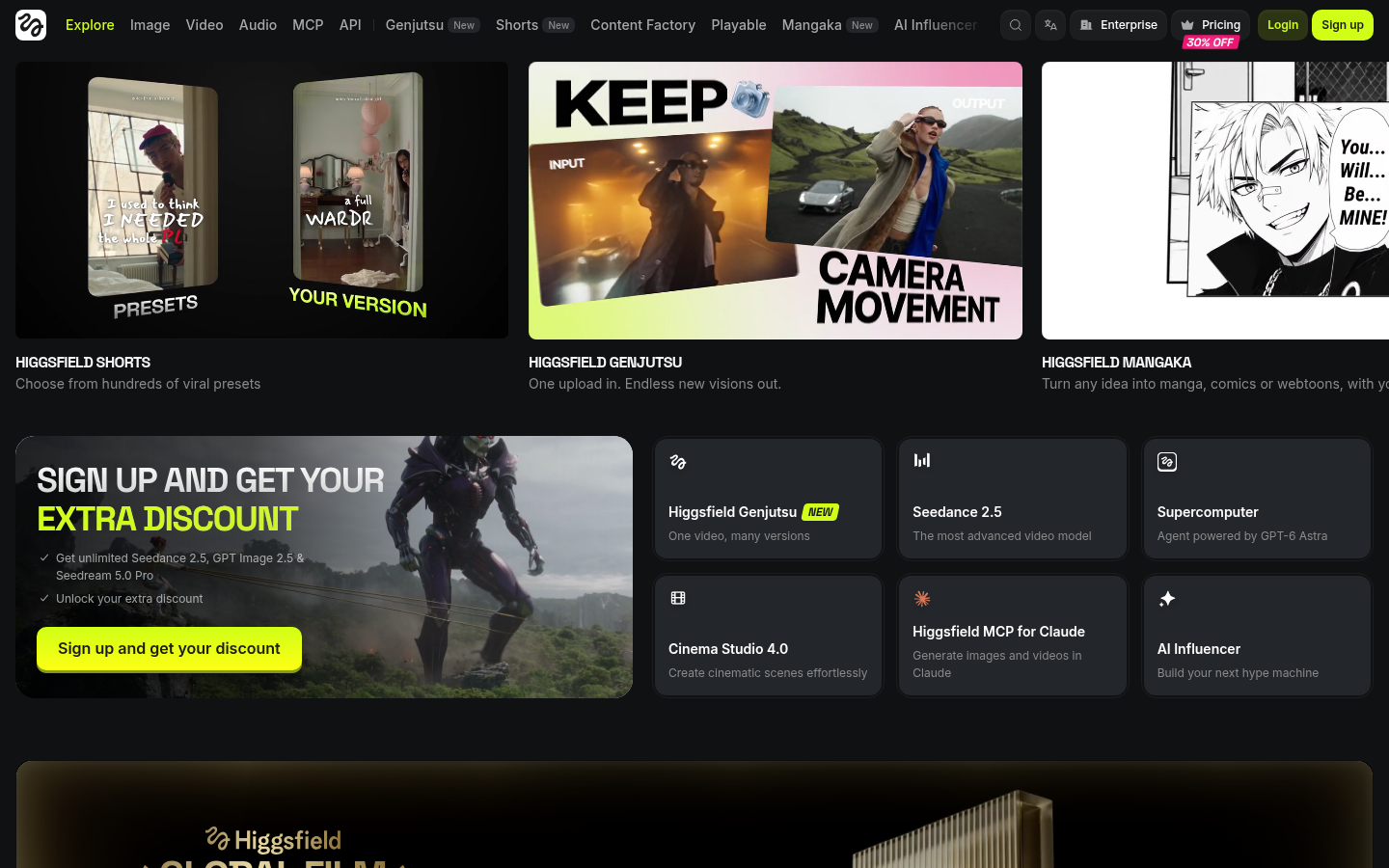
Higgsfield
- One subscription reaches Seedance 2.5, Kling 3.0, Veo 3.1 and Wan 3.0 without juggling accounts
- Soul ID keeps a character face stable from shot to shot, which most wrappers still fake
- Cheaper per clip than Runway on shared models such as Kling 3.0 and Veo 3.1, per Higgsfield's own rate comparison (a vendor source, so verify)
- Native MCP connector lets you drive generations from Claude Code or similar agents
- Subscription credits expire at renewal and Trustpilot complaints about cancellation and refunds are frequent
- No real multi-track editor, so finishing still happens in Premiere, DaVinci or CapCut
- Unlimited and free generations work in the web app only, not through MCP, CLI or Canvas
The better generator hub: more models, character consistency, lower entry price per clip.
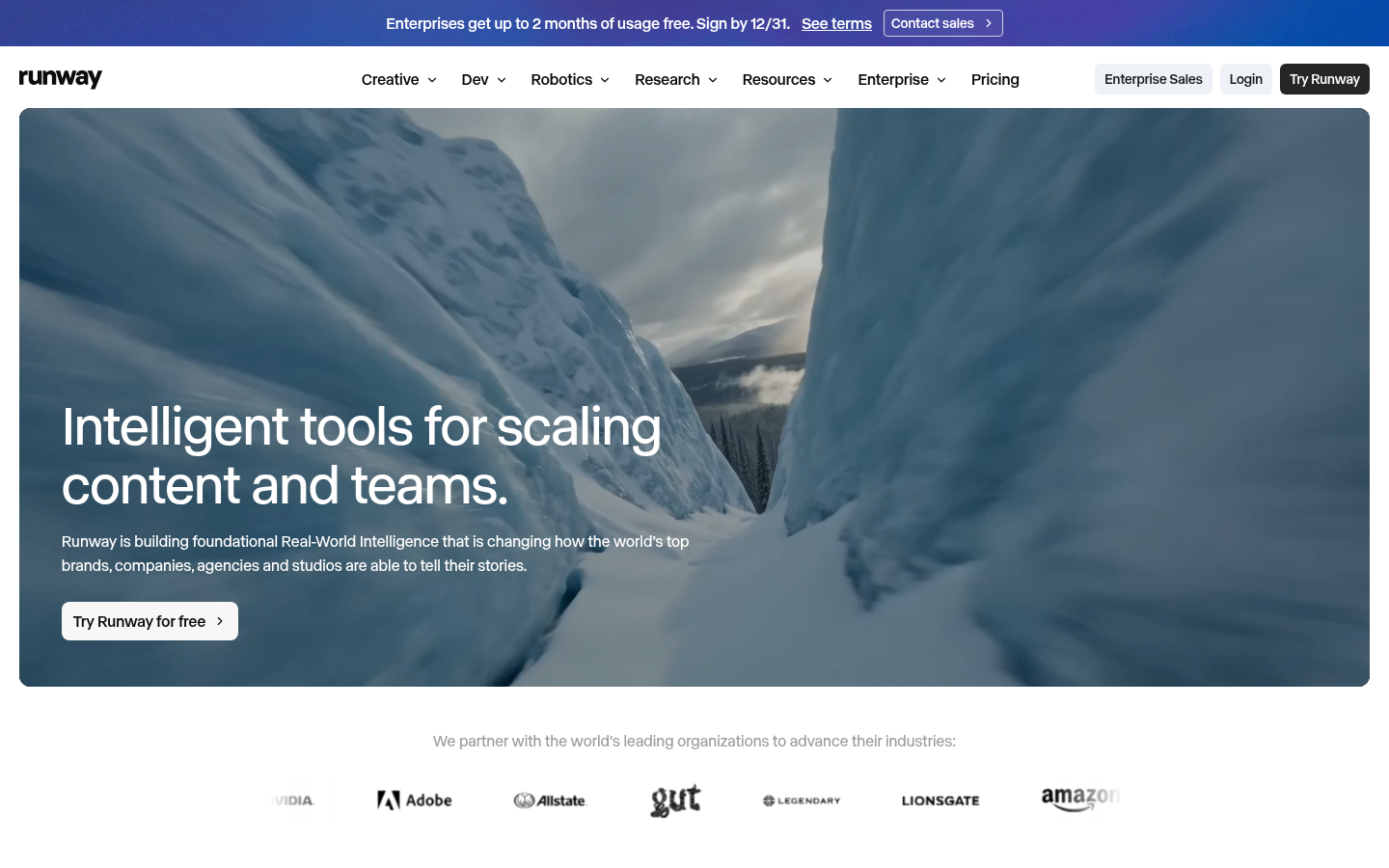
Runway
- Gen-4.5 and Aleph 2.0 are first-party models, and Aleph handles real video-to-video edits
- Max adds HDR, ProRes and image sequences, which matters if footage goes to a colorist
- Larger credit pools: 9,500 credits on Max against 3,000 on Higgsfield Ultra
- API access and MCP on Pro and above make it easy to wire into a pipeline
- Credits vanish quickly on long Gen-4.5 clips, and standard and Pro credits do not roll over
- Trustpilot sits around 1.1 out of 5 on about 384 reviews, with billing and slow renders the main gripes
- Entry plan gets 52 seconds of Gen-4.5 a month, which is thin for iterating on one idea
The better finishing tool: edit, upscale and hand off inside one app.
At-a-glance
| Higgsfield | Runway | |
|---|---|---|
| Entry and mid-tier price | Starter $19/mo (270 credits), Plus $47/mo (1,200 credits), annual billing; $59 on Plus if monthly | Standard $12/mo (625 credits), Pro $28/mo (2,250 credits), annual billing; $15 and $35 if monthly |
| Free tier | Limited free generations on a few models, no credit balance, watermarked output | 125 one-time credits, no expiry, enough to test a handful of clips |
| Models on tap | Seedance 2.5, Kling 3.0, Veo 3.1, Wan 3.0, Nano Banana Pro, GPT Image 2.5 plus its own DoP and Soul models | Its own Gen-4.5 and Aleph 2.0, plus Kling 4.0, Seedance 2.0 Pro and 2.5, Nano Banana Pro and more |
| Editing and finishing | Genjutsu variations, Cinema Studio 4.0, upscale and outpaint tools; no full timeline editor | Aleph 2.0 video-to-video edits, Agent timeline, 4K upscaling, HDR and ProRes on Max |
| Character consistency | Soul ID and character sheets keep one face across shots | Reference images and Act-Two performance transfer; no dedicated identity model |
| Concurrency and credit rollover | 2, 6 and 8 parallel video jobs on Starter, Plus, Ultra; credits expire every cycle | 5, 15 and 20 parallel jobs on Standard, Pro, Max; Max rolls credits over for one month |
Verdict
Pick Higgsfield if you generate a lot, want to test every frontier video model in one place and need the same character to survive five shots. Pick Runway if the clip is raw material and the real work is editing, upscaling and delivering it. If you only want to try one for free, Runway's 125 credits give you more room to test than Higgsfield's free tier.
How we tested
This is a desk comparison, not a render benchmark. We read both official pricing pages on 3 and 4 November 2026, copied plan prices, credit pools and per-model credit costs, and cross-checked them against two vendor blogs and three independent write-ups. We did not generate matched clips on both platforms for this update, so quality claims come from published tests and user reports, not our own side-by-sides. Review scores come from Trustpilot (read live) and G2 (Higgsfield only). Higgsfield is a partner link on this site with a 0% commission, and that did not change the scores. Custom scores are our judgment on a 0 to 5 scale, weighted toward generation breadth, price per usable clip, finishing tools and billing trust.
Higgsfield vs Runway is not a fight about which model looks better. Both rent you Seedance 2.5, Kling and Veo. The split is what sits around those models: Higgsfield bets on breadth and character consistency, Runway bets on editing and finishing. Our pick for most prexi readers is Higgsfield, with one big exception for anyone who edits footage for a living.
The short version
Higgsfield wins on model access, entry price per clip and character identity through Soul ID. Runway wins on editing depth, first-party models, resolution and handoff formats. Neither is cheap once you generate daily. Both burn credits faster than the pricing page suggests.
If you came for a one-line answer: Higgsfield to generate, Runway to finish. Steal that, then read the numbers.
What both platforms actually share
This is the part older comparisons miss. In late 2026 the two overlap heavily. Seedance 2.5, Kling, Wan 3.0, Veo 3.1 and Nano Banana Pro are reachable on both. If your whole workflow is "type prompt, get clip", the model list stops being a differentiator and the credit math takes over.
That changes how you should shop. Do not ask which one has the best model. Ask which one burns fewer credits for the shot you make every day, and what you do with the clip afterward.
Pricing and credits, read off the pricing pages
Both sell credits, and credits are not interchangeable. Here is what the pages said in November 2026.
Higgsfield, billed annually: Starter $19 a month for 270 credits, Plus $47 for 1,200, Ultra $99 for 3,000. Monthly billing is higher, for example $59 for Plus and $129 for Ultra. Its free tier has no credit balance and watermarks output.
Runway, billed annually: Standard $12 a month for 625 credits, Pro $28 for 2,250, Max $76 for 9,500. Monthly billing is $15, $35 and $95. The free plan gives 125 one-time credits that do not expire.
Per shot, Runway charges 12 credits per second of Gen-4.5, so a 10-second clip is 120 credits. On Standard that is about $2.30 at the annual rate. Higgsfield lists a Kling 3.0 clip of 8 seconds at 720p around 14 credits, which is roughly $0.55 on Plus at the annual rate. Different models, so this is not a fair fight, but it shows the shape: Higgsfield is cheaper for the models it resells, Runway is pricier because Gen-4.5 is its own premium engine.
Rollover matters. Higgsfield subscription credits expire each cycle. Runway Standard and Pro expire too, and only Max keeps unused credits for one extra month.
Where Higgsfield is stronger
Breadth first. One subscription reaches every major video model, plus Higgsfield's own DoP camera presets, Genjutsu variations and Cinema Studio 4.0. Switching model on the same prompt takes one click, which is the real win when you are hunting for the look.
Then identity. Soul ID and character sheets keep a face stable across shots. If you build a recurring character for a series, a brand mascot or a lookbook, this is the feature that saves you hours. Runway can approximate it with reference images, but it does not train a dedicated identity.
Last, agents. Higgsfield ships an MCP connector, so you can drive generations from Claude Code. Runway has MCP too, but only from Pro upward.
Where Runway is stronger
Finishing. Aleph 2.0 edits existing footage frame by frame, Agent assembles sequences, and 4K upscaling is included from Standard. On Max you get HDR, ProRes and image sequences, formats a colorist will actually accept.
Scale. Max gives 9,500 credits and 20 parallel generations, against 3,000 credits and 8 parallel video jobs on Higgsfield Ultra. For a small studio with a deadline, that headroom is real.
Plumbing. Runway has a developer API, brand kits and custom voice clones on higher tiers. If video generation is a step in a larger pipeline, Runway is easier to plug in.
What users say, and why to read it carefully
Trustpilot is not kind to either. Higgsfield sits at 4.0 out of 5 across roughly 5,290 reviews. Runway sits at 1.1 across roughly 384 reviews. On G2, about 78 percent of Higgsfield's roughly 90 reviews are five stars. We could not find a comparable G2 page for Runway.
Treat the gap with suspicion. Trustpilot attracts angry subscribers, and the complaints are the same on both: credits that run out quickly, cancellation friction, slow queues on so-called unlimited plans, and support that points you to a chatbot. Runway's sample is much smaller and heavier on billing disputes. It tells you to check your plan before you pay, not that one tool cannot render a good clip.
Which one should you pick
Pick Higgsfield if you are an art director or creative technologist testing models, building a recurring character, or turning stills into motion for moodboards and social. You will spend most of your time on the generation side, and Higgsfield makes that cheaper and wider.
Pick Runway if you take footage you already shot and need to change it, or if the clip ships to a client in a pro format. Aleph and the higher tiers justify the price there.
Pick neither on annual billing before you have used the free tier for a week. Credits expire, and both plans are easy to outgrow or underuse.
Verdict
Higgsfield takes it for the prexi audience: more models, a lower entry price per clip, and Soul ID for continuity. Runway takes it for editors and teams who finish in the tool. Whichever you start with, test the same three prompts on both. Crack it open, compare the credit bill, then commit.