Best AI Image Generator in 2026: 7 Tools Ranked by Job
Summary
Looking for the best AI image generator in October 2026? ChatGPT Images 2.5 leads the Arena leaderboard and is our overall pick. Midjourney V8.2 still wins on style, Ideogram 4.0 on in-image text, Adobe Firefly on commercial safety, FLUX on open weights and pipelines, Nano Banana on free access, and Higgsfield on one-subscription model access. Prices and limits below were checked on official pages on October 6 and 7.
Seven AI image generators ranked after the September 2026 shake-up: ChatGPT Images 2.5 leads, Midjourney wins on style, and Ideogram owns text in images.
At-a-glance
| ChatGPT | Midjourney | Nano Banana (Gemini) | Ideogram | Adobe Firefly | FLUX (Black Forest Labs) | Higgsfield | |
|---|---|---|---|---|---|---|---|
| Entry price | Go $8/mo, Plus $20/mo | $10/mo (Basic) | Free; Google AI Pro about $19.99/mo | $15/mo billed annually ($20 monthly) | $9.99/mo (Standard) | Pay per image, from about $0.04 list price on the API | $19/mo (Starter) |
| Free access | Limited image creation on the free plan | No free tier | Free in the Gemini app, daily limits | Free plan, one job at a time, no private mode | Free daily generations with limits | No free consumer plan from BFL; open weights to self-host | Free plan with limited use |
| Current model | ChatGPT Images 2.5 (GPT-Image-2.5), Sept 2026 | V8.2, July 2026 | Nano Banana 2, plus Nano Banana Pro | Ideogram 4.0 | Firefly models plus 30+ partner models | FLUX 3 Image and the FLUX.2 family | Soul 2.0 plus partner models |
| Where you use it | ChatGPT on web, mobile and desktop, plus API | Midjourney web app and Discord | Gemini app and API | Ideogram web app and API | Firefly web app and Adobe apps | API, open weights and partner apps | Higgsfield web and mobile apps |
| Commercial use | No indemnification advertised; C2PA metadata attached | Allowed; companies above $1M yearly revenue need Pro or Mega | No indemnification advertised; check Google's terms | Stated as allowed, free plan included | Trained on licensed content; enterprise indemnification on select outputs | Open weights need a commercial licence | Follows the terms of the model you pick |
| Open weights | No | No | No | Yes, Ideogram 4.0 is an open model | No | Yes, FLUX.2 [dev] and [klein] weights | No |
ChatGPT
- Sits at the top of the Arena text-to-image board (GPT-Image-2.5, preliminary score of 1425 on October 6, 2026)
- Multi-turn edits that change one element while the rest stays put, plus sketch input and comments on the image
- Image creation is included on every ChatGPT plan, from free to Pro, so there is no separate bill
- The 2.5 scores are still marked preliminary, so the lead may shrink as more votes come in
- Reviewers keep describing a recognisable house look that needs deliberate prompting to avoid
- No Firefly-style indemnification advertised for regular plans, which matters for client work
The default answer in October 2026: strongest ranking, easiest editing loop, lowest friction.
Midjourney
- V8.2 (July 24, 2026) focuses on aesthetics and personalisation, and it shows in moodboard-grade output
- The new Edit Model replaces Omni Reference, Character Reference and Retexture in one tool
- Standard plan and up give unlimited Relax images, which suits heavy exploration
- No free tier, and Stealth Mode is locked behind the $60 Pro plan
- Not in the top 15 of the Arena text-to-image board as of October 6, 2026
- Text inside images is still its weak spot compared with Ideogram and GPT-Image
Still the one with taste, but no longer the one that wins blind votes.
Nano Banana (Gemini)
- Free access inside the Gemini app, which makes it the cheapest serious place to start
- Nano Banana Pro plans a scene before rendering and accepts up to 14 reference images, according to a 2026 roundup
- Nano Banana 2.1 ranks fifth on the Arena board (1328, preliminary) as of October 6, 2026
- Pricing is split across Gemini plans and API rates, so it is hard to know what you will pay
- No Firefly-style commercial indemnification is advertised
- Free limits change often and are not published as a fixed number
Try it first because it costs nothing, then decide if you need more.
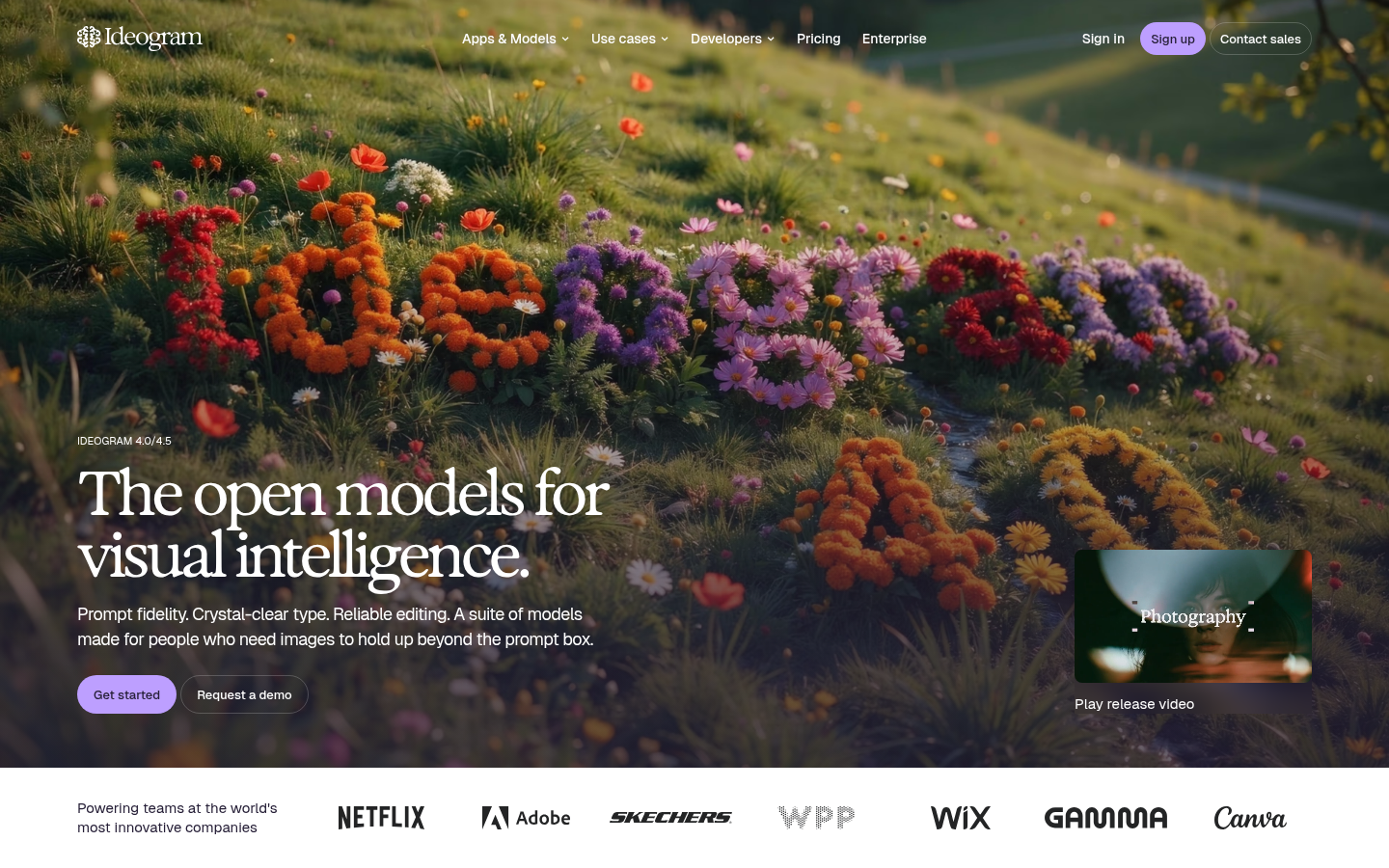
Ideogram
- Built around legible typography, and Ideogram 4.0 is released as an open model
- Plus plan at $15/mo billed annually (2,400 priority credits) adds private generation
- Free plan allows commercial use of your images, per Ideogram's own pricing page
- Specialist: it trails the leaders on pure photorealism and on the Arena board
- Free plan limits you to one running or queued generation and no private mode
- Pro at $60 monthly ($42 annual) is steep next to bundles that include several models
Pick it for type-heavy layouts, skip it as your only tool.
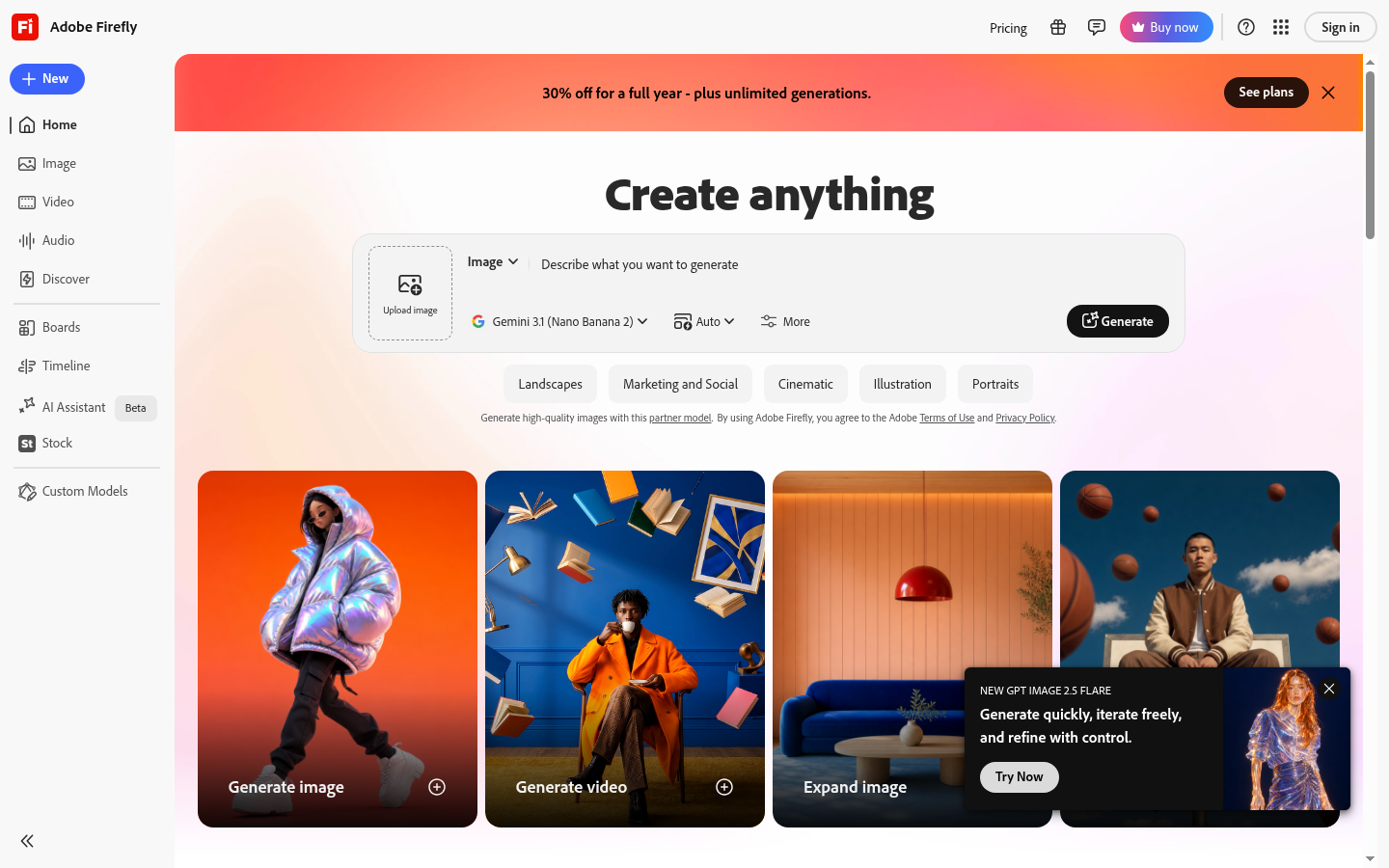
Adobe Firefly
- Firefly models are trained on licensed and public domain content, with Content Credentials attached
- Also exposes partner models, including Nano Banana and FLUX.2 Pro, inside one app
- Standard at $9.99/mo gives 2,000 generative credits, with free daily generations on top
- Indemnification applies to eligible enterprise customers on select Firefly outputs, not to partner models
- Roundups rate raw Firefly output below Midjourney and Nano Banana for artistic range
- Credits are metered, so heavy partner-model use drains the allowance quickly
The cautious choice, and for agencies that is a feature.
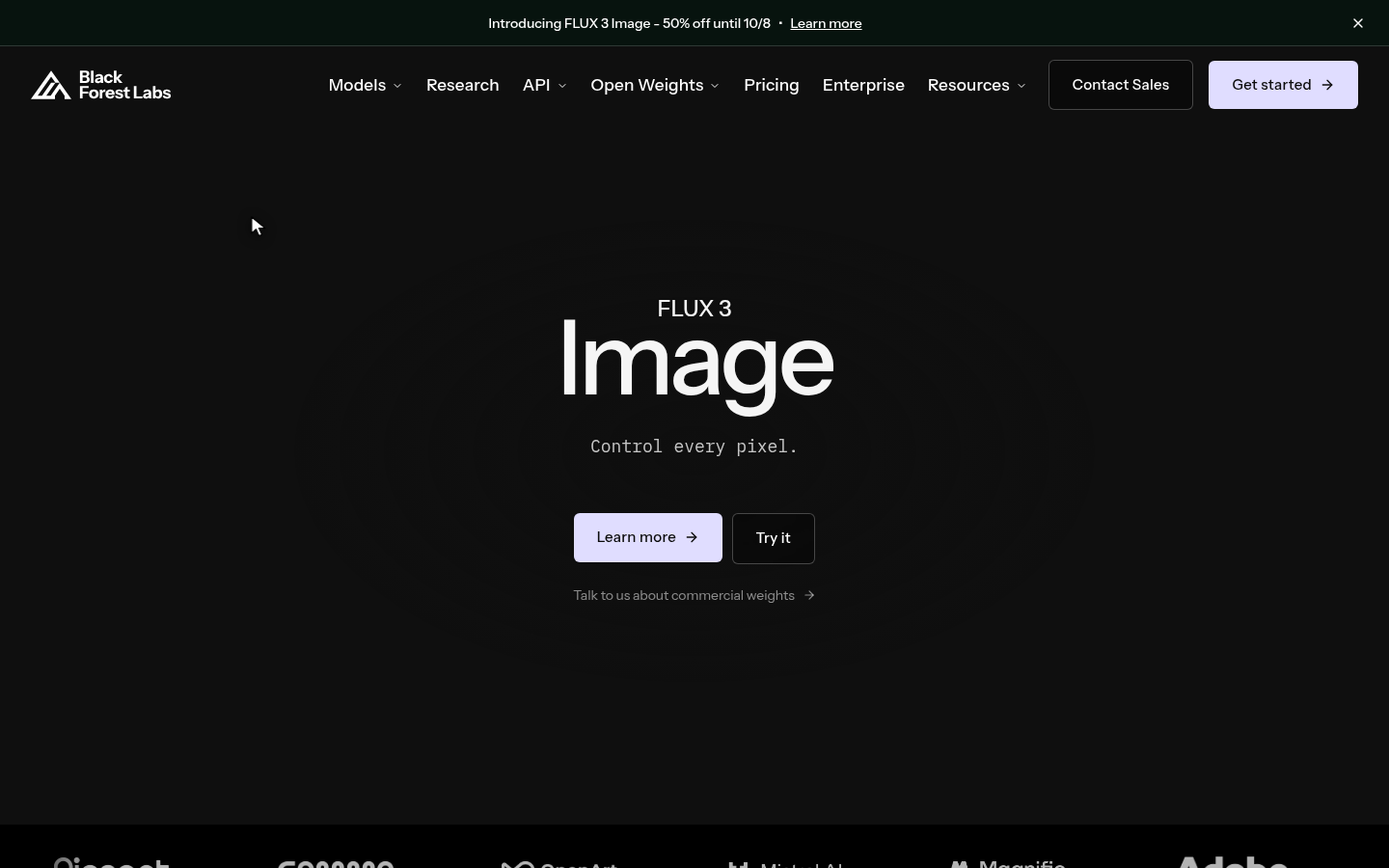
FLUX (Black Forest Labs)
- Open weights (FLUX.2 [dev], [klein]) let you run it on your own hardware
- API pricing is per image and public, from about $0.04 list price for FLUX 3 Image at 768 by 768
- Shows up inside OpenArt, Higgsfield and Firefly, so you can use it without touching the API
- Black Forest Labs sells no consumer subscription, so the polished interface comes from third parties
- No FLUX model appears in the Arena top 15 as of October 6, 2026
- Open weights need a commercial licence for business use, which adds paperwork
A builder's model: great if you code or use it through another app.
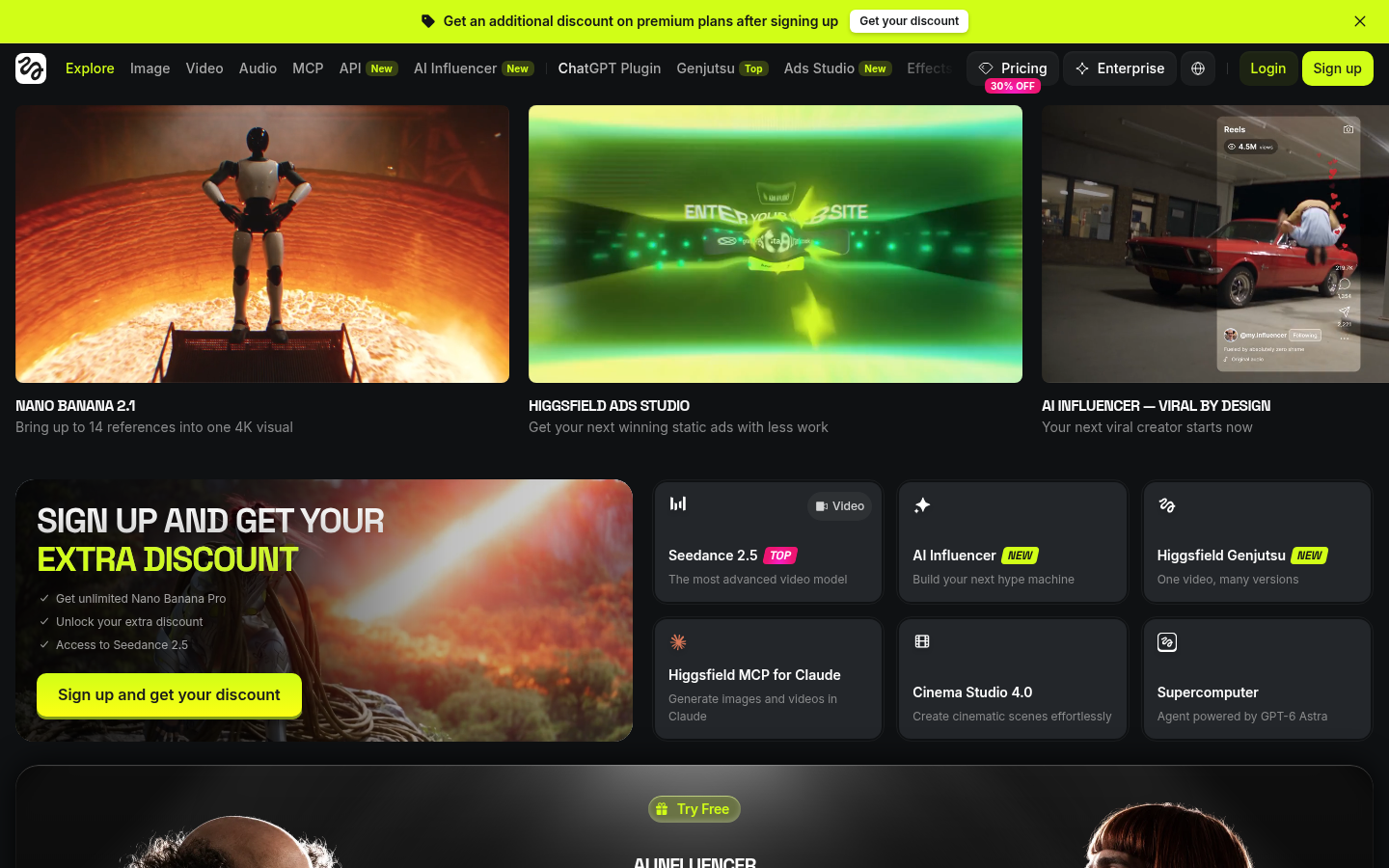
Higgsfield
- Starter at $19/mo includes Nano Banana Pro, GPT Image, FLUX.2 Pro, Seedream and its own Soul 2.0
- Image and video generation live in the same credit pool, handy for moodboard to motion workflows
- Rated 4.5 out of 5 on G2 from 88 reviews, a small but positive sample
- Credit-based plans (270 credits on Starter) run out fast with 4K or video work
- Only 88 G2 reviews, so the satisfaction signal is thin compared with older tools
- You inherit the licensing terms of whichever underlying model you pick
Useful when you want several models in one place, less so if one model is enough.
Verdict
ChatGPT Images 2.5 is the best AI image generator for most people in October 2026: it tops the Arena board, edits cleanly across turns, and comes with a plan you may already pay for. Midjourney V8.2 wins on taste, Ideogram 4.0 on text, Adobe Firefly on commercial safety, and FLUX on control. Pick by the job you are actually doing, not by the hype around a launch.
How we tested
This ranking is a desk comparison, not a new blind test. We checked each tool's official pricing and docs between October 6 and 7, 2026, read the Arena text-to-image leaderboard (6M+ human votes, updated October 6, 2026), and used G2 review scores where they exist. Editorial scores out of 5 weigh output quality as ranked by voters, editing control, price per month, free access and licensing clarity. Arena measures what voters prefer in blind pairs, so it favours polish over art direction. Where a claim comes from a third-party roundup rather than a vendor page, we say so. Higgsfield and OpenArt links on this site may be affiliate links; neither paid for placement, and Higgsfield ranks last of the seven.
Best AI image generator, short answer: ChatGPT Images 2.5 for most people, Midjourney V8.2 if you care about style, Ideogram 4.0 if the image has words in it. The rest of this page tells you why, and where each one breaks.
The short version
You do not need seven subscriptions. You need to know which job you are doing.
Overall: ChatGPT Images 2.5. It sits first on the Arena board and edits in plain conversation.
Style and moodboards: Midjourney V8.2.
Words inside the image: Ideogram 4.0.
Client work with legal worries: Adobe Firefly.
Pipelines and self-hosting: FLUX.
Free to start: Nano Banana inside Gemini.
Steal this rule: pay for one generalist, then rent a specialist for the weeks you need it.
What moved since the summer roundups
Six months ago this list looked different. Most spring and summer roundups crowned Nano Banana Pro or Midjourney. Then OpenAI shipped ChatGPT Images 2.5 on September 8, 2026, with up to 50% lower latency than Images 2.0 and precise multi-turn edits. Two GPT-Image-2.5 variants now hold the top two Arena slots.
Midjourney did not stand still either. V8.2 landed on July 24, 2026 and folded Omni Reference, Character Reference and Retexture into one Edit Model. Black Forest Labs launched FLUX 3 Image with 50% launch pricing that ends October 8. Ideogram released 4.0 as an open model.
The catch: several of those Arena scores are labelled preliminary. A lead of 25 or 30 points can move.
Pick by job
Art direction. If you build moodboards for editorial or music packaging, Midjourney is still the tool that surprises you in a good way. It will ignore half your prompt and hand you something better. That is a feature until a client sends a brief with exact copy and colours.
Typography. Posters, album covers with titles, packaging mockups: Ideogram first, GPT-Image second. Midjourney remains the one to avoid for legible text.
Photoreal and reference-heavy edits. Nano Banana (via Gemini) and ChatGPT Images both handle reference photos well. Nano Banana wins on cost because the Gemini app is free to start.
Commercial safety. Firefly is the only one here that pairs licensed training data with enterprise indemnification on select outputs. Read the fine print: that cover does not extend to the partner models routed through the same app.
Control. FLUX is the one you script. Open weights, per-image pricing, and a growing list of apps that wrap it.
One bill for many models. Higgsfield and OpenArt both bundle many models. The trade is credits: they drain faster than you expect once you generate in 4K or add video.
OpenArt sits outside the main seven because it overlaps with Higgsfield: a credit-based hub with 100+ models, from $14 per seat per month on its Starter plan. If Higgsfield does not suit you, it is the closest alternative to check.
Where the leaderboard lies to you
Arena is useful, and it is also one number. It counts which image a voter prefers in a blind pair, so it rewards clean, polished, broadly pleasing output. That is not the same thing as a distinct visual voice.
Midjourney being absent from the top 15 does not mean it makes worse art. It means voters pick it less often against GPT-Image in side-by-side polls. For an art director, the difference matters.
Same warning in the other direction. A top score tells you nothing about price caps, queue limits or what your client's legal team will accept.
What these tools cost in practice
Entry prices cluster around $8 to $20 a month: ChatGPT Go at $8, Firefly Standard at $9.99, Midjourney Basic at $10, Ideogram Plus at $15 billed annually, Higgsfield Starter at $19. The real difference is what the money buys.
Midjourney Basic gives 3.3 hours of Fast GPU time, then you pay $4 per extra hour. Ideogram Plus gives 2,400 priority credits. Firefly Standard gives 2,000 generative credits. ChatGPT does not publish a fixed image count on the pricing page; it says Free is limited, Go is more, Plus is more accurate, and Pro is unlimited and faster.
FLUX is different again. At the list price, a 1K FLUX 3 Image costs $0.048 and a 4K one costs $0.607, with half off until October 8. If you generate a few hundred images a month, per-image billing can be cheaper than a subscription. If you generate thousands, the maths changes again.
Models that missed the cut
The Arena top 15 also includes Microsoft's MAI-Image-2.6, Grok Imagine, Reve 2.1, Meta's Muse Image, Seedream 5.0 Pro and Qwen-Image 3.0 Pro. Some of them are reachable through the hubs above (Higgsfield lists Reve and Seedream, for instance). We left them out because they either lack a standalone product we could verify or are mostly used through another app.
Leonardo, Canva and Stable Diffusion also deserve mentions for specific crowds: Leonardo for game assets, Canva for non-designers who want layouts, Stable Diffusion for people who want a local setup. They did not make the seven because the others cover those jobs more directly in October 2026.
Steal this: a two-tool setup
If you want one practical takeaway, here it is.
Keep ChatGPT (or Gemini's free tier) for everyday generation and edits.
Add Midjourney Basic at $10 for the weeks you are doing moodboards.
Open Ideogram only when a layout needs readable type.
Move to Firefly the day a client asks about licensing.
That covers almost every brief for under $40 a month. Remix it, then tell us what you swapped.